Funding Solutions to Global Problems
There is no shortcut to sound science. Berkeley Lab is a proving ground for new ideas, often years in development. Philanthropic support in the early stages of research can be a catalyst for more sustainable funding. Donors today are making possible promising, high-impact projects like these:
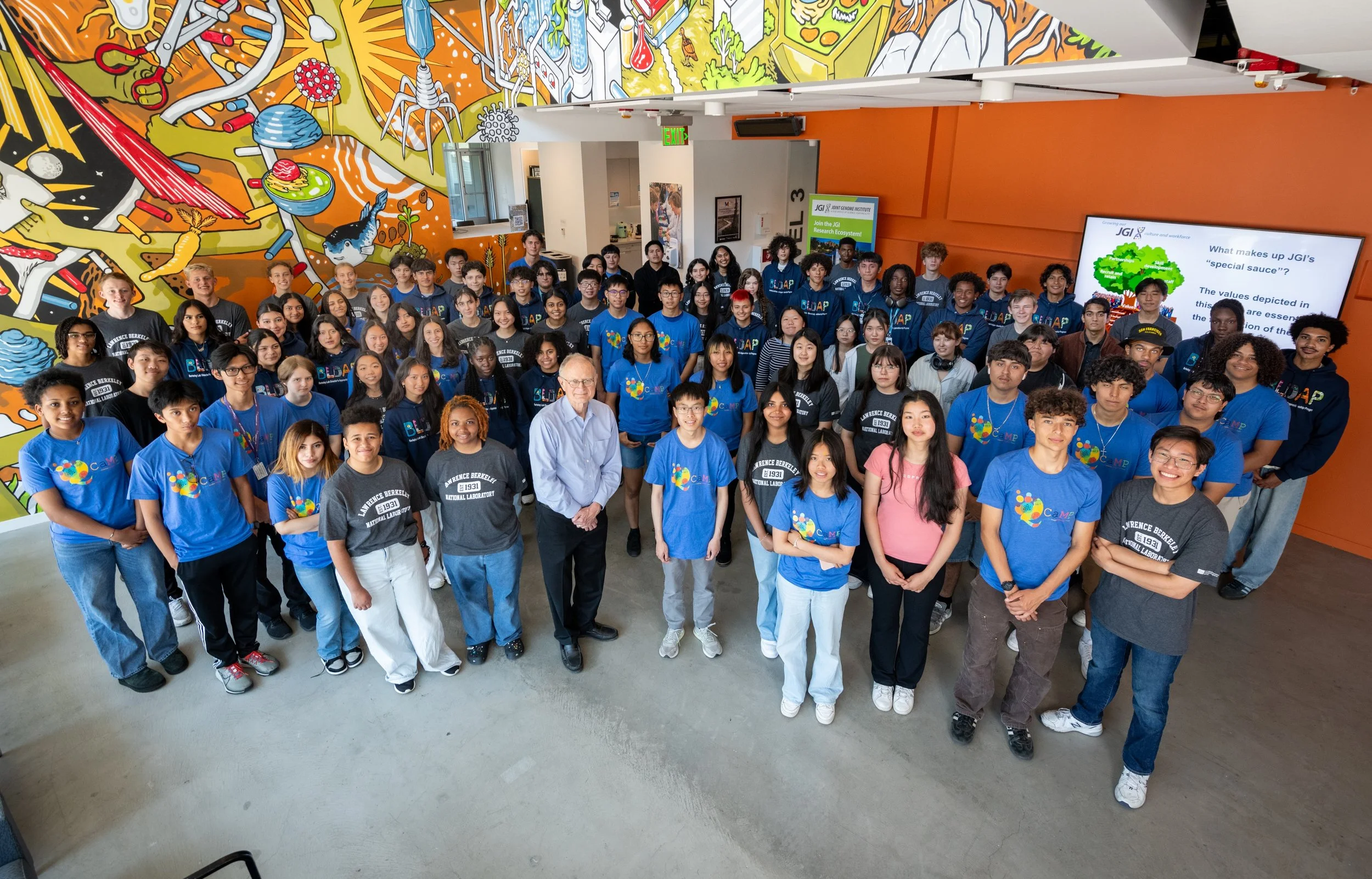
Studies have shown that when students participate in authentic STEM experiences, they are more likely to consider pursuing STEM majors and careers. The Berkeley Lab Foundation-supported STEM program offers year-round authentic STEM experiences that connect aspiring students with DOE researchers through career talks, hands-on workshops, and engaging activities. These opportunities foster sustained engagement and support continued learning.
Parasites are a danger to human health, affecting billions of people throughout the world. Understanding parasites' function at a molecular level can lead to new treatment options for a range of diseases, such as malaria, toxoplasmosis, and childhood diarrhea. With the support of a Chan Zuckerberg grant, a team of scientists from Stanford, UC San Francisco, Berkeley Lab, and CWI Amsterdam is applying a spectrum of imaging methods, including fluorescence light microscopy (FLM), soft X-ray tomography, and cryo-electron tomography (cryo-ET) and -microscopy (cryo-EM), to obtain precise images of parasites. Key to these investigations are the "Mixed-Scale Dense" machine learning algorithms, introduced by Berkeley Lab's Center for Advanced Mathematics for Energy Research Applications (CAMERA). These algorithms are used to derive and interpret the 3D structures obtained through these combined image sources. Photo Credit: Jess Seldon/Department for International Development
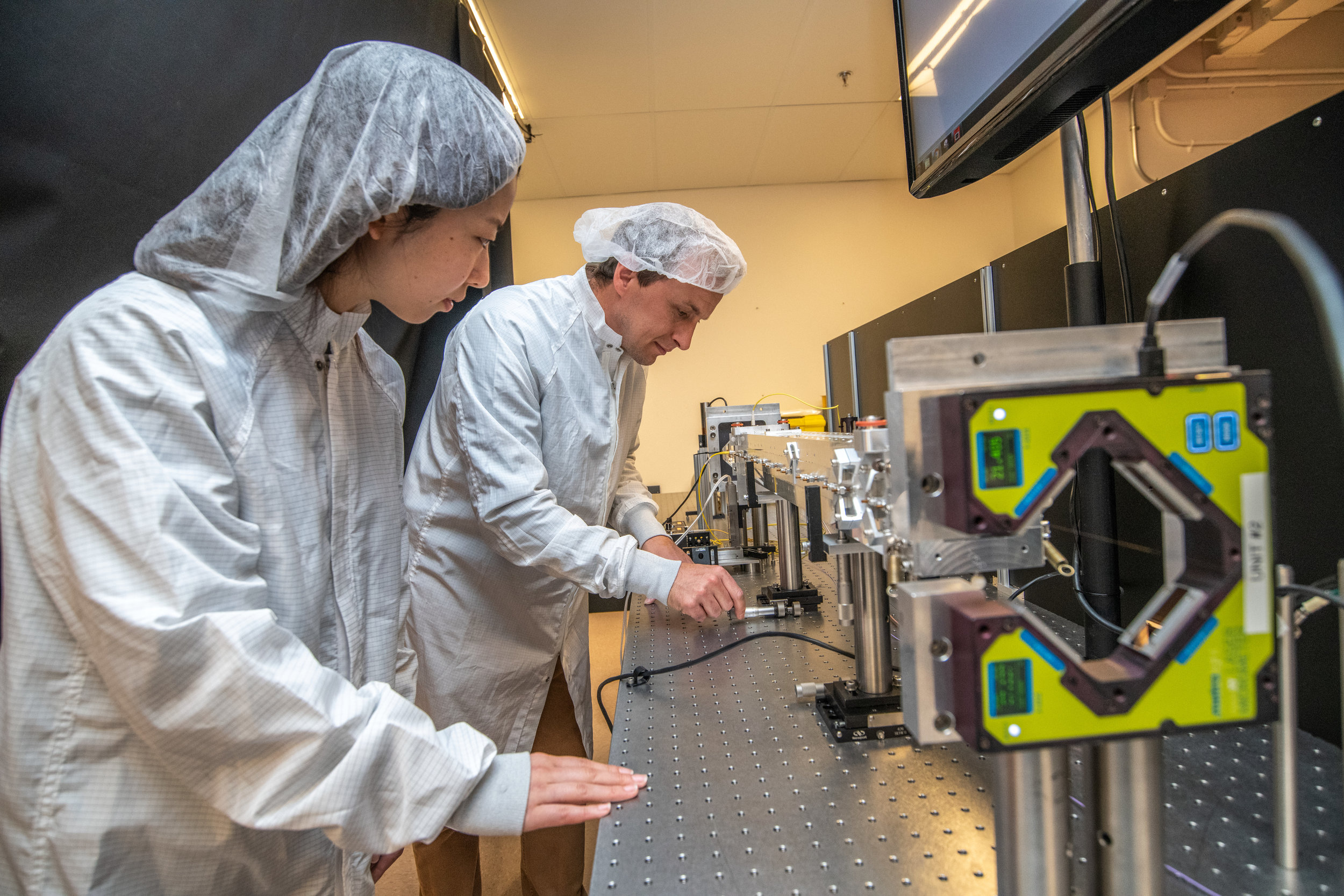
A grant from the Gordon and Betty Moore Foundation is supporting Berkeley Lab to develop compact, free-electron lasers that will serve as powerful and affordable X-ray sources for scientific discovery. Unlike conventional accelerators, which use radio waves, laser-plasma accelerators use optical lasers to accelerate electrons across short distances—only centimeters—enabling scientists to observe chemical reactions, visualize the flow of electrons, or watch biological processes unfold. This work has important implications for medical diagnostics. But access to this new technology is extremely limited. The grant supports Berkeley Lab’s efforts to significantly reduce the size and cost of these accelerators, thereby expanding access to this technology.
Private donations can often leverage public funds by supporting complex, long-term scientific research. The Dark Energy Spectroscopic Instrument (DESI) requires specialized optics to capture spectra of the expanding universe. The lenses used for the telescopes are large and can take months to grind and polish. A bridge loan from the Heising-Simons Foundation allowed Berkeley Lab to get a head start. When federal funding is awarded, the project will be ready to go. By capturing the light of 30 million galaxies, DESI will provide a 3D map of the universe going back 10 billion years.